Five Electrical Emergencies That Can’t Wait Until Morning

Most electrical problems are patient. A dead outlet in the guest room or a light that flickers now and then will still be there on Monday, and fixing them during business hours costs less and causes less stress. A smaller group of problems works on a much shorter clock, and the hard part for most homeowners is telling the two apart while standing in a dark hallway at eleven at night.
It helps to know ahead of time who picks up after hours. When someone in Hidalgo County searches for electrical emergency response in McAllen, they want a phone that’s answered at 2 a.m., not a voicemail promising a callback after the weekend. Alpha Electrical Solutions keeps an emergency line staffed around the clock, aims for same-day response, and sends licensed, bonded and insured electricians from its Pharr office a short drive from McAllen. Saving that number before anything goes wrong takes a minute and saves frantic searching later.
The five situations below are the ones that earn that late-night call. A few others that only feel urgent come up toward the end.
When the Nose Notices First
Electrical trouble often shows up as a smell before you see anything. Overheating insulation and melting plastic give off a sharp, acrid odor that people describe as burning fish, hot plastic, or something like a struck match. If it seems to come from an outlet, a switch plate, a light fixture or the panel, treat it as an active hazard even if there’s no smoke.
If it’s safe to reach the panel, shut off the breaker for that area. If you can’t tell which one, use the main. Unplug nearby devices only if the cord and outlet are cool. Once you see smoke or flames, the electrician comes second and the fire department comes first. Never throw water on an electrical fire. A kitchen extinguisher rated for Class C fires is made for exactly this, and every home should have one within reach of the panel.
Even after the smell fades, the damage behind the wall is still there. Heat that scorched a wire once will do it again the next time that circuit carries a load.
Lines on the Ground or Pulled From the House
Valley storms don’t need to be hurricanes to do damage. A strong summer thunderstorm can drop a tree limb onto the service drop, the cable that runs from the utility pole to your house. Sometimes the line comes down completely. More often it sags low over the driveway or rips the meter base partly off the wall.
Treat any downed line as live. Keep children and pets well back, stay out of puddles touching it, and never try to move it with a broom or rake. Report a fallen line to the utility right away.
What surprises many homeowners is how responsibility is split. The utility handles the wire up to the house, but the mast, weatherhead and meter base on the wall usually belong to the homeowner. If those are bent or torn loose, a licensed electrician has to repair them before the utility will restore service. That’s why these calls often need both the utility and an electrician on the same night.
Water Where Wiring Lives
The Valley’s flat ground lets heavy rain collect quickly, and garages, laundry rooms and low patios take on water faster than people expect. Once water touches outlets, extension cords or a panel, the room becomes dangerous to enter.
If the floor is wet and the power is still on, don’t wade in to reach the panel. Shut off the main from a dry spot if you can do it safely. If you can’t, leave and call for help. After the water drops, resist flipping everything back on. Breakers, receptacles and GFCI devices that sat in floodwater usually need replacing rather than drying out, because silt and corrosion stay inside where you can’t see them. The equipment manufacturers’ association NEMA publishes storm recovery guidance on water-damaged electrical gear that explains why so much of it ends up replaced.
The House That Bites Back
A shock from a light switch, a tingle when you touch the kitchen faucet, or a jolt from a washing machine all mean electricity is going somewhere it shouldn’t. Common causes include a broken ground, a wire rubbing through its insulation, or a failing appliance energizing its own metal case.
A related problem is harder to recognize. When the shared neutral connection fails at the panel or the service, voltage across the house becomes unbalanced. The symptoms are distinctive:
- Lights in one room glow brighter than normal while others go dim
- Bulbs burn out much faster than usual
- Electronics shut off or reset on their own
- Ceiling fans speed up or slow down without anyone touching them
- Appliances hum loudly or give off a hot smell
A lost neutral can push close to double the normal voltage onto some circuits and destroy expensive electronics within minutes. If the lights act this way, turn off the main and call for help. Don’t wait to see if it settles down.
A Panel That Hums Like a Hive
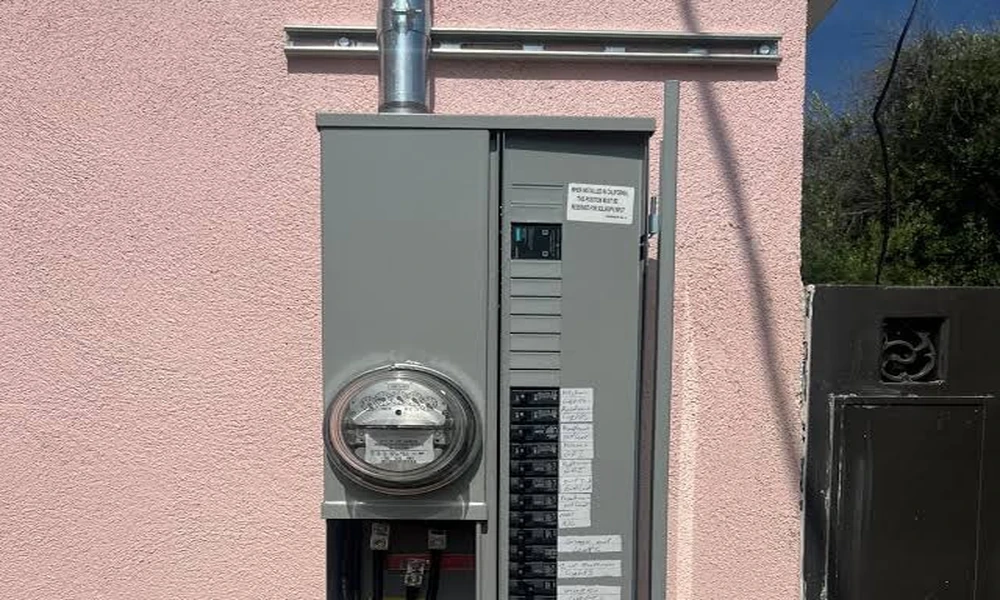
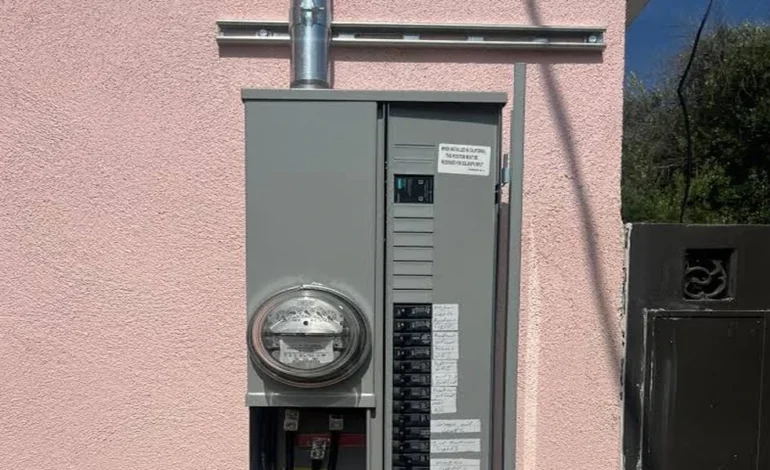
A healthy electrical panel makes almost no sound. Buzzing, crackling or sizzling from behind the cover means current is arcing across a loose connection or a failing breaker. Scorch marks around a breaker, a cover that’s hot to the touch, or a breaker that trips again the instant it’s reset all point to the same thing.
Don’t remove the cover to look inside. The bus bars and service conductors behind it stay live even with the main breaker off, because power from the utility reaches them before the main. Shut off the main if you can do it without touching anything that’s sparking or hot, then wait for someone with the right gloves and tools.
The Urgent Ones That Can Usually Wait
Some situations feel like emergencies but usually aren’t. A blackout that covers the whole street is the utility’s problem, and its outage map will show more than any electrician can. A single tripped breaker that resets and stays on is usually just an overloaded circuit. A GFCI that trips in the bathroom while a hair dryer runs is doing its job.
What these have in common is that nothing is hot, nothing smells, nothing is wet, and nobody got shocked. Without those signs, booking a daytime visit is fine.
Making the Call Count
When you do call after hours, a few clear details help whoever answers. Say what you noticed first, whether it was a smell, a sound, a shock or water. Say which breakers you’ve already shut off. Mention anyone in the house who depends on powered medical equipment, because that can change how quickly a crew needs to arrive. Then stay out of the affected room and let the person with the meter and the insulated tools take over.