7 Hidden Details That Decide How Long a Deck Lasts
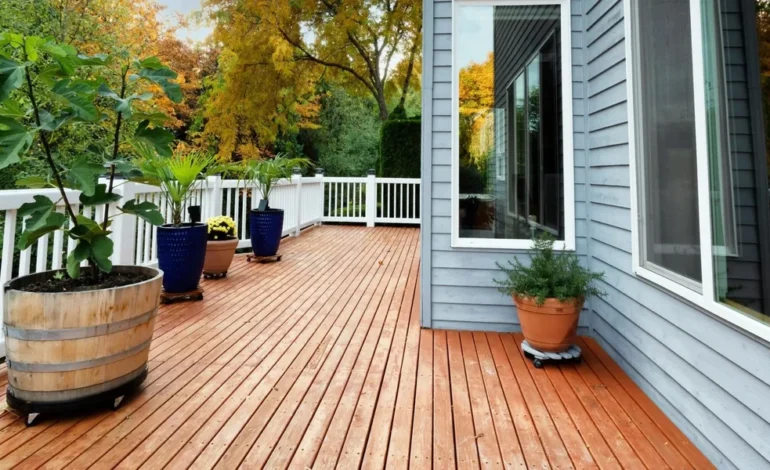

Most conversations about a new deck start and end with the surface: board color, grain pattern, railing style. Those choices matter, but they sit on top of a system that does the real work. A premium composite board can carry a 25 to 50 year warranty, while the pressure treated frame holding it up may start failing in half that time if it was built carelessly. That mismatch has become one of the most common reasons decks get torn out early.
Southeast Michigan makes the gap wider. Winters here bring dozens of freeze and thaw swings, heavy wet snow, and a spring melt that saturates dense clay soils. All of those forces work on footings, fasteners, and lumber that nobody looks at once the boards go down. Understanding what happens underneath is the best way to judge a bid, plan a resurfacing project, or decide whether an older deck is worth keeping.
This is the part of the job that Hartman’s Hammer is built around. The company is based in Novi and led by Chad Hartman, who has more than 20 years of experience. It builds custom wood, composite, and PVC decks as a Trex Pro Certified contractor and also works with Fiberon and TimberTech. Homeowners in Novi, Plymouth, Northville, Walled Lake, Commerce Township, South Lyon, Brighton, West Bloomfield, and nearby communities get frames built to meet or exceed manufacturer requirements, not just an attractive top layer. If you are planning a new deck or wondering whether your current frame can take new boards, call 248-417-6991 for an honest assessment.
1. Footings Set Below the Frost Line
In much of Southeast Michigan, local codes call for footings at least 42 inches deep. Soil above that depth freezes, expands, and lifts anything resting in it, a process known as frost heave. A shallow footing can look fine for two or three winters. Then the deck starts to tilt, stairs pull away from landings, and railings loosen. Diameter matters too. Footings should be sized to the load they carry and to what the soil can bear, and clay that holds water deserves extra attention. Precast deck blocks sitting on grade are generally acceptable only for low, freestanding platforms, and even those tend to shift.
2. The Connection Between Post and Concrete
Posts should not be buried directly in concrete or soil. Wood wicks moisture from below, and concrete wrapped around a post holds water against its base, which is where rot usually begins. Galvanized post bases hold the post slightly above the footing so it can dry out. At the top, beams should bear on notched 6×6 posts or sit in rated post caps rather than being bolted to the side of a 4×4. Codes have moved firmly in this direction over the last decade, and side-bolted beams on older decks are a frequent finding during inspections.
3. The Ledger and Its Flashing
The ledger board attaches the deck to the house, and it is involved in a large share of serious deck failures. Two issues cause most of them.
The first is fasteners. Ledgers need through bolts or structural screws in a staggered pattern, never nails alone.
The second is water. Without proper flashing above and behind the ledger, rain runs down the siding and gets trapped between the board and the house’s rim joist. That rots the deck and the home’s own framing at the same time. Siding should also be removed where the ledger attaches, so the ledger bolts against solid structure.
4. Lateral Load Connectors
A deck can be firmly attached vertically and still pull away from a house sideways, especially when a crowd shifts its weight together. Building codes now address this with lateral load connections. These are typically hold-down hardware that ties the deck joists through the house rim to the interior floor framing. The hardware is inexpensive and invisible once the boards are installed, which is exactly why it gets skipped. On an older deck, a builder will look for it from underneath or from an unfinished basement ceiling.
5. Joist Spacing Matched to the Board and the Pattern
Composite boards are less stiff than solid wood, so joist spacing carries more weight in the decision. Trex’s main product lines generally call for joists no more than 16 inches on center when boards run perpendicular to them, and 12 inches for diagonal layouts. Picture frame borders, herringbone patterns, and breaker boards need added blocking so every board end lands on solid support.
This matters most on resurfacing projects. Many older decks were framed at 24 inches on center for thick wood boards. Laying composite on that frame produces a bouncy surface and can put the board warranty at risk. Adding joists between the existing ones is a common fix.
6. Framing Rated for the Life of the Boards
Because the boards can outlast the frame, careful builders now pay close attention to lumber grade and protection. Joists and beams that are difficult to replace should use lumber rated for ground contact, even when they sit above grade, because they stay damp and are hard to inspect. Butyl joist tape along the tops of joists and beams has become standard on quality builds. It keeps water from sitting in screw holes and along the top edge, which is where rot starts in treated lumber. Cut ends need a brush-on preservative, since factory treatment rarely reaches the core of the board. For low decks or damp lakeside lots, some homeowners are also choosing steel or aluminum framing.
7. Airflow and Drainage Underneath
Composite and PVC decks need air moving beneath them to stay dry. Fiberon, for example, recommends at least 1.5 inches between the ground and the bottom of the joists, and decks built close to grade benefit from much more. Skirting should be vented rather than sealed tight.
Boards also need side-to-side gaps for drainage and seasonal movement. Those gaps are adjusted when boards are installed in cold weather, which matters for fall builds in Michigan. The ground under the deck should slope away from the house, with landscape fabric and gravel to keep down weeds and standing water. Downspouts should never discharge beneath the deck.
None of these seven details shows up in a finished photo, yet together they decide whether a deck lasts twelve years or thirty. When comparing quotes, ask how each one will be handled. When considering resurfacing, have the frame checked before choosing boards. The surface is the part everyone sees, but the structure underneath is what makes a long board warranty meaningful.